
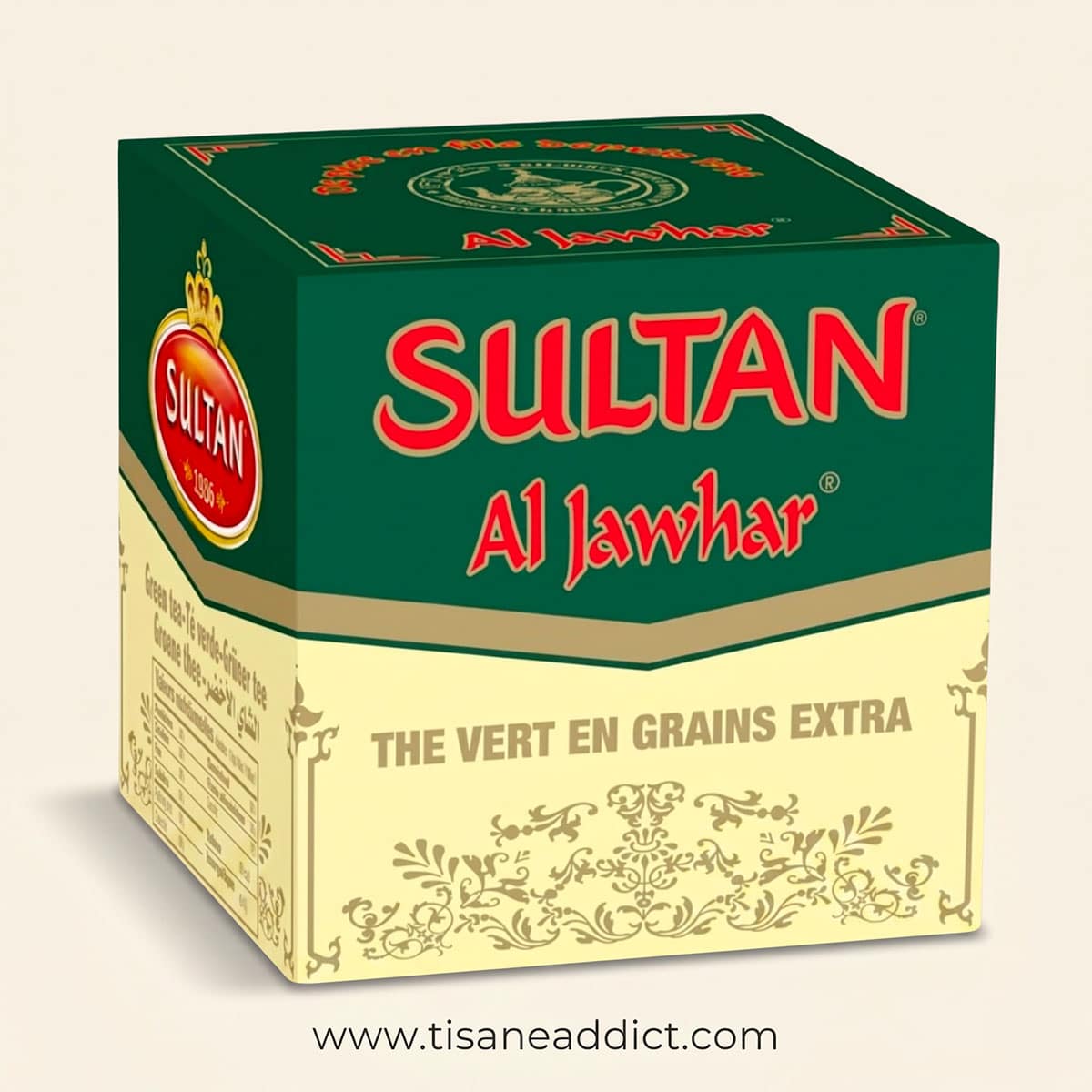
Jawhar Sultan Green Tea Leaves – 100% Natural – 200 g
3,20 €
Grain Jawhar Sultan (No. 5) is the top-of-the-line tea: young gunpowder green tea leaves, grade 3505AA, rolled into tightly packed pearls for a full-bodied, well-rounded, and intensely fragrant cup. Intensity 9, the go-to choice for lovers of full-bodied green tea and robust mint tea.
In stock
FAQ: Jawhar Sultan Green Tea Beans
What does "Al Jawhar," the name of this Sultan tea, mean?
Al Jawhar means «the jewel» in Arabic, and the name reflects the positioning of this No. 5 grade: the “extra” grade within the Sultan family of whole-leaf green teas, reserved for connoisseurs and special occasions. At Sultan, each grade of tea has its own name, from Ambar to Rafiâa.
What does the 3505AA grade of Grain Jawhar mean?
This is a grade in the gunpowder green tea classification system: 3505 refers to a size consisting of fine, tightly rolled pellets, and the suffix AA indicates the “extra” grade, made from young leaves. The younger the leaf and the denser the rolling, the more concentrated the aromas in the infusion: this is what gives this variety its intensity rating of 9.
What does Grain Jawhar Sultan green tea taste like?
Expect the boldest of the Sultan beans: a powerful initial flavor, a dense, vegetal body, and a lingering finish that carries through all three glasses of the tasting. When thoroughly rinsed and brewed briefly, it remains smooth and free of harshness, even when very sweet.
How do you prepare Grain Jawhar using the Sultan method?
For 5 to 6 glasses: Place 2 tablespoons of tea leaves (10 to 12 g) in the teapot, pour in about 10 cl of boiling water, let steep for 1 minute, stir in a circular motion, and discard this first infusion. Then add 50 cl of boiling water, fresh mint, and sugar to taste; let steep for 2 to 3 minutes; then pour from a height to aerate the tea and create a foam.
What is the difference between Jawhar, Rafiâa, and Ambar at Sultan?
All three belong to the family of green tea beans, but each has its own character: Ambar offers a smooth taste and an amber-colored brew; Rafiâa is the standard everyday tea; and Jawhar, with its 3505AA extra grade and intensity level of 9, sits at the top of the scale as the boldest variety. Many households keep two tins: one for everyday use, and Jawhar for guests.
When is the best time to drink Grain Jawhar Sultan tea?
Like all green teas, it naturally contains caffeine, and its strength (level 9) makes it best suited for the morning, after meals, and during afternoon gatherings. For the late evening, a caffeine-free herbal tea is a more natural choice to follow in the teapot.
| Weight | 0,300 kg |
|---|
Related products


Organic tea & herbal tea
Organic Raspberry Leaves – Caffeine-Free Herbal Tea with a Tea-Like Flavor – 100 g