
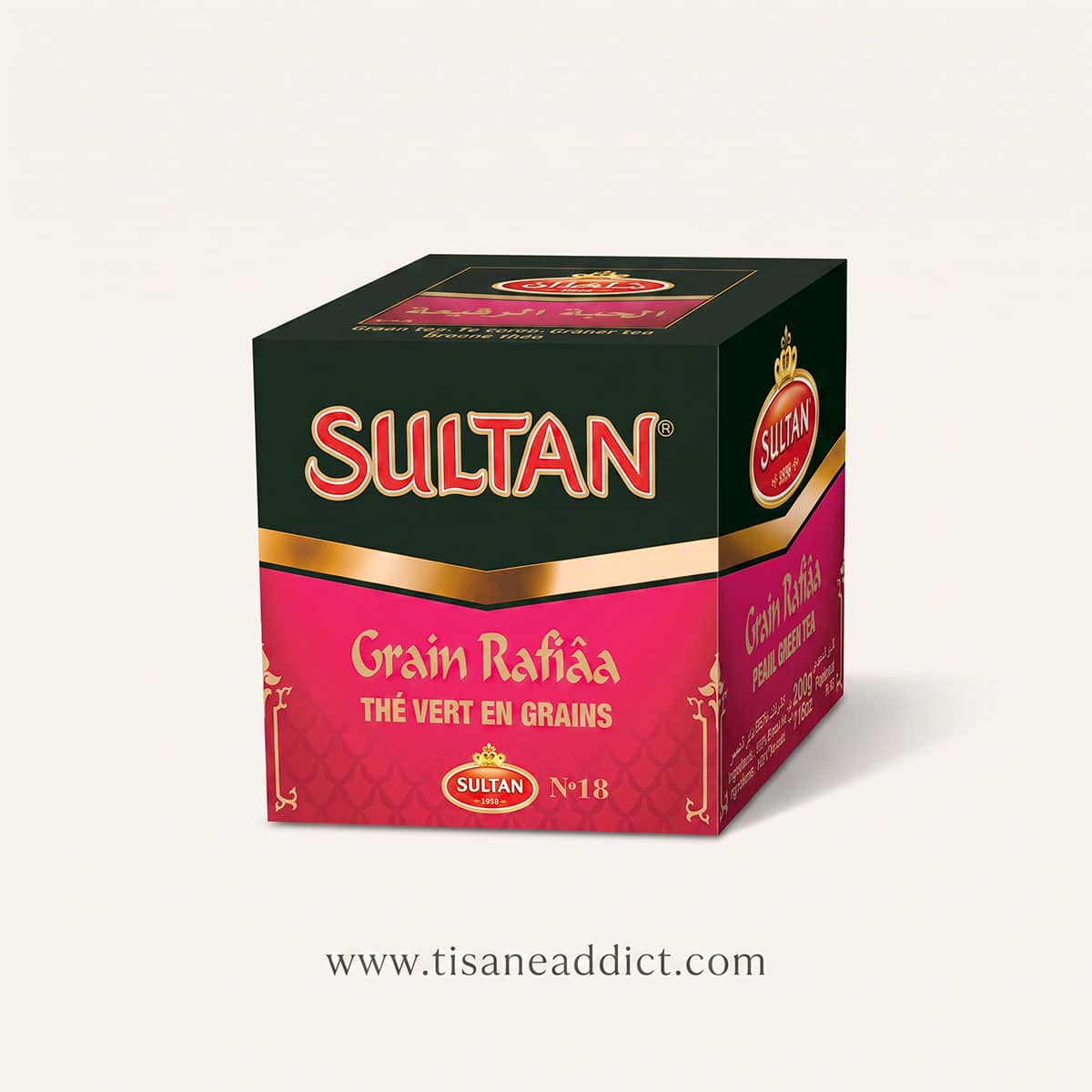
Rafiâa Sultan Green Tea Leaves – 100% Natural – 200 g
3,20 €
Grain Rafiâa Sultan (No. 18) is a pure green tea made from gunpowder tea pellets that serves as the base for authentic mint tea: plain, without any added flavoring, to be blended with summer mint or winter herbs. Family-size box of 200 g in bulk, or about 80 cups or 40 teapots.
In stock
FAQ — Rafiâa Sultan Whole-Leaf Green Tea
What does «Rafiâa» mean in the name of this Sultan tea?
In Arabic, rafiâa evokes refinement, elegance, and grace—a name that signals the positioning of this No. 18 blend: a carefully selected green tea in bean form, intended for the daily Moroccan tea ritual. At Sultan, each grade of tea bean has its own name, from Ambar to Jawhar.
Is Rafiâa grain suitable for making mint tea?
That’s exactly what it’s for: a pure, unflavored gunpowder green tea, whose slight herbal bitterness perfectly balances the freshness of the mint and the sweetness of the sugar. Add a bunch of fresh mint and sweeten to your liking: you’ll have the traditional atay, just as it’s served in Morocco.
Why is Grain Rafiâa tea rolled into pearls?
Rolling the leaves into small, tightly packed pellets—the so-called “gunpowder” style—protects the leaves from air and light, which preserves their aromas during storage. When brewed, the tea leaves unfurl slowly and release their flavor gradually: this is what makes this type of tea so well-suited for generous brews in a Moroccan teapot.
How can you avoid bitterness when brewing Grain Rafiâa tea?
Two simple steps are all it takes: first, rinse the tea leaves with a little boiling water and discard it immediately—this is the traditional Moroccan method—then avoid letting the tea steep for too long. When served in a Western-style cup, water at 80–85 °C and a steeping time of 2 to 3 minutes yield a clean, herbaceous brew without any astringency.
What is the difference between Rafiâa beans and other Sultan beans?
Sultan offers its whole-leaf green teas in several grades, each with its own distinct character—Ambar, the mild one with an amber-colored infusion; Jawhar, the rich one; and Assala, which strikes a balance between strength and finesse. Rafiâa, available in a 200-gram box, is positioned as the everyday tea: simple, consistent, and generous—perfect for the family teapot every day.
When is the best time to drink Grain Rafiâa tea?
Like all green teas, it naturally contains caffeine: it’s the perfect accompaniment to breakfast, after a meal, and in the afternoon—in Morocco, they say there’s no set time for atay. For late evenings, a caffeine-free herbal tea is a more natural choice to follow.
| Weight | 0,250 kg |
|---|
Related products


Sultan Tea & Herbal Tea
Infusion Silhouette Sultan - Herbal tea with hibiscus, aniseed and cherry stem - 20 teabags