Organic Raspberry Leaves – Caffeine-Free Herbal Tea with a Tea-Like Flavor – 100 g
6,90 €
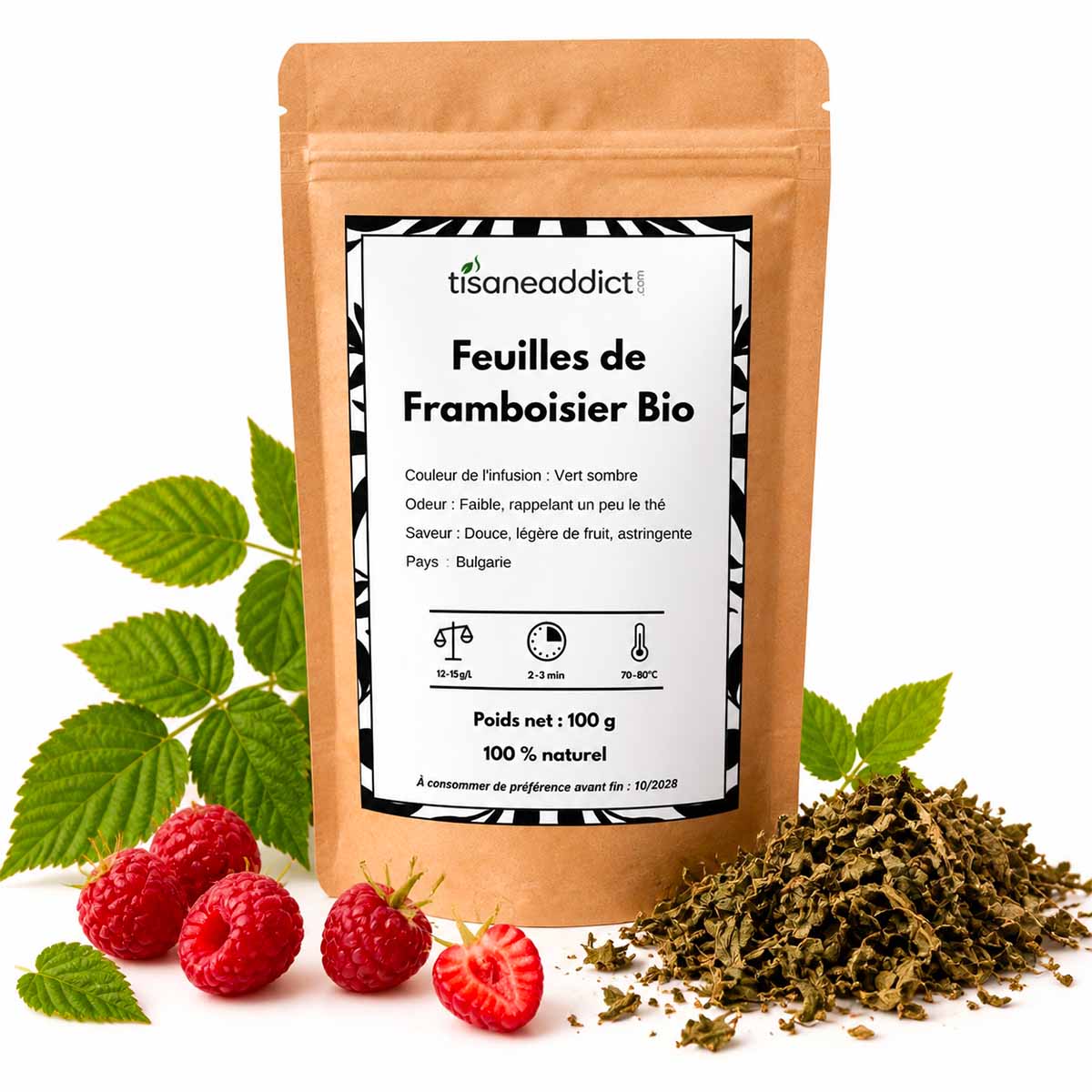
Organic Raspberry Leaves, the herbal tea that most closely resembles plain black tea: a dark green infusion, a mild and slightly fruity flavor, a subtle astringency, and no caffeine. Harvested in Bulgaria from organically grown plants, 100-gram resealable bag, steep for 2 to 3 minutes at 70–80 °C.
In stock
FAQ: Organic Raspberry Leaves
What does raspberry leaf tea taste like?
A mild, slightly fruity flavor, with a subtle astringency from the leaf’s tannins: this is what makes it similar to plain tea. The aroma is faint and somewhat reminiscent of tea; the infusion is dark green. Don’t expect it to taste like raspberries themselves—it’s a leaf, not a fruit.
Do raspberry leaves contain caffeine?
No. The raspberry bush has nothing to do with the tea plant: its leaves contain neither theine nor caffeine. The only thing it shares with tea is its high tannin content, which explains its similar taste. It can therefore be enjoyed at any time of day, including in the evening.
Why do people say that raspberry leaves look like tea?
Because it is rich in tannins, just like tea leaves: it has the same mild astringency, the same deep color, and the same subtle aroma of dried leaves. In Europe, it has long served as a substitute for tea when tea was scarce or expensive, and even today it remains the herbal tea that most closely resembles plain tea.
How do you prepare organic raspberry leaves?
Like green tea: 12 to 15 g per liter, water at 70–80 °C, steep for 2 to 3 minutes. Steeping for too long or using water that is too hot brings out the tannins and makes the tea taste harsh. Enjoy it plain, with a dash of honey, or iced with a few fresh raspberries.
Where do these raspberry leaves come from?
From Bulgaria, one of Europe’s leading producers and exporters of dried herbs, renowned for the quality of its harvests. The leaves are organically grown and packaged in a 100-gram resealable bag.
Can raspberry leaves be combined with other plants?
Yes, and that’s actually one of its strengths: its neutral, tannic base pairs very well with mint, verbena, a hint of citrus zest, or hibiscus petals. It’s an excellent base for creating your own caffeine-free blends while retaining the structure of tea.
| Weight | 0,150 kg |
|---|
Related products


