
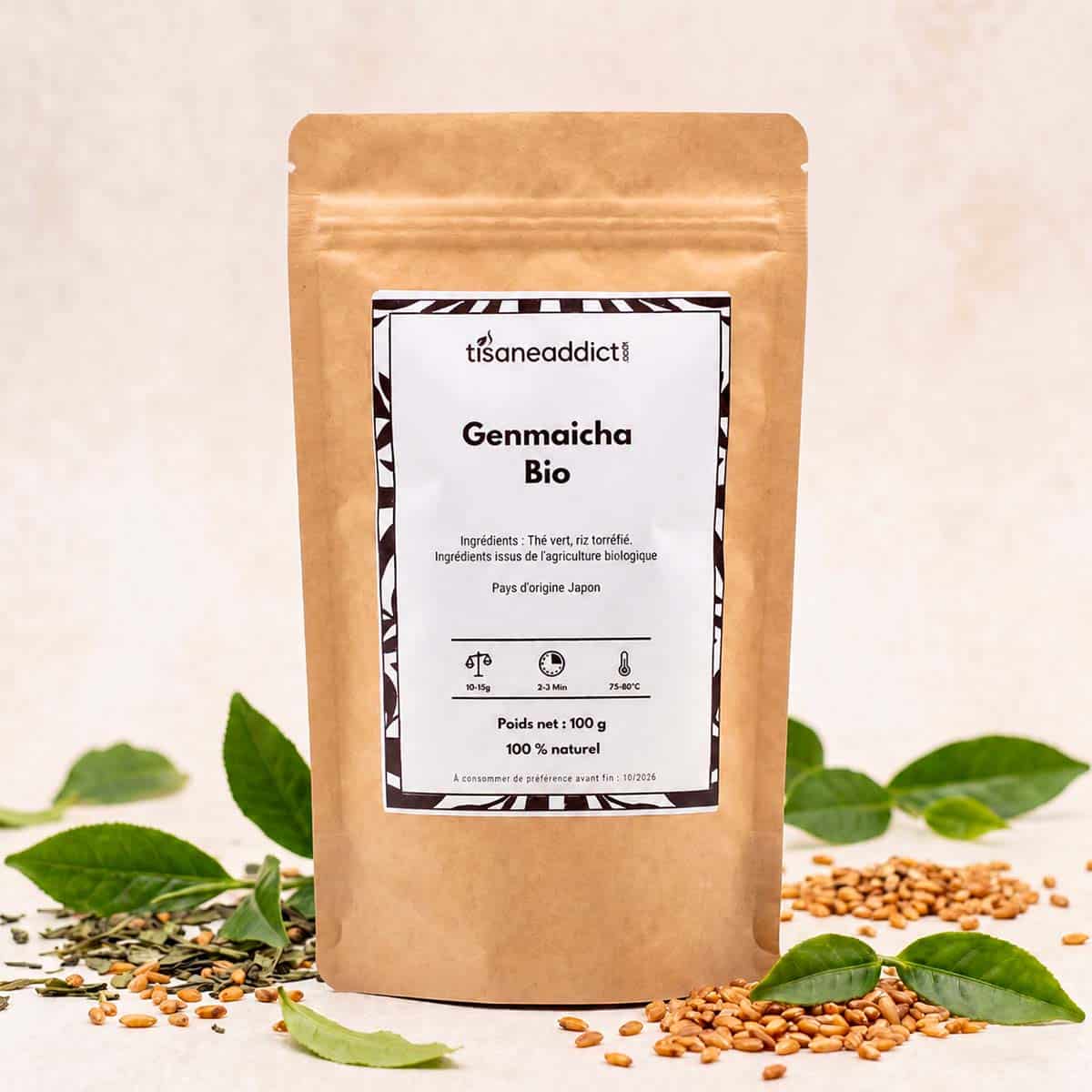
Organic Genmaicha – Japanese Green Tea with Roasted Rice – 100 g
12,90 €
Organic Genmaicha, the famous Japanese popcorn tea: Japanese green tea blended with roasted rice, resulting in a golden cup with notes of hazelnut and toasted grain, and lower in caffeine than pure green tea. 100-gram resealable bag, made with organic ingredients; just as good hot as it is cold.
In stock
Organic Genmaicha FAQ
What exactly is genmaicha?
It is a traditional Japanese tea that blends green tea and roasted rice. Its name breaks down into gen-mai-cha, literally «whole-grain rice tea.» Originally created as an economical tea, in which the rice stretched out the tea leaves, it has become one of Japan’s most popular teas thanks to its unique, nutty flavor.
Why is genmaicha called "popcorn tea"?
During roasting, some rice grains pop and open up into small white flowers, just like miniature popcorn. These popped grains, clearly visible in the blend, are the hallmark of genmaicha and have earned it this nickname in the English-speaking world.
What does organic genmaicha taste like?
A round, comforting, golden cup with notes of hazelnut and toasted grain, enhanced by a fresh, herbal touch from the green tea. It’s a gentle, very approachable tea, often enjoyed by those who find classic green teas too bitter.
Does genmaicha contain a lot of caffeine?
Like all green teas, it contains caffeine, but less than a pure green tea in the same amount: roasted rice, which is naturally caffeine-free, replaces part of the tea leaves in each spoonful. This is what makes it a tea that can be enjoyed well into the late afternoon, when other teas become too strong.
How do you prepare organic genmaicha?
Use about 10 g per liter—or two heaping teaspoons for a large cup—in water between 60 and 75 °C, never boiling: this is the golden rule for Japanese green teas. Let it steep for 2 to 4 minutes, depending on the desired strength. For cold brew, a few hours in the refrigerator will yield a very mild, cereal-flavored iced tea.
What should you pair genmaicha with at the table?
This is the quintessential Japanese meal tea: it pairs well with rice, fish, sushi, and savory dishes without overpowering them, and its toasty notes complement grilled flavors. As an afternoon treat, its nutty notes pair naturally with cookies, almond pastries, and milk chocolate.
| Weight | 0,150 kg |
|---|
Related products


