




Choosing a cast-iron teapot: capacity, pattern and colour
All five models share the same basics: cast iron, a 304 stainless infuser and 1.4 kg on the scales. Three criteria set them apart.
800 ml or 1 litre
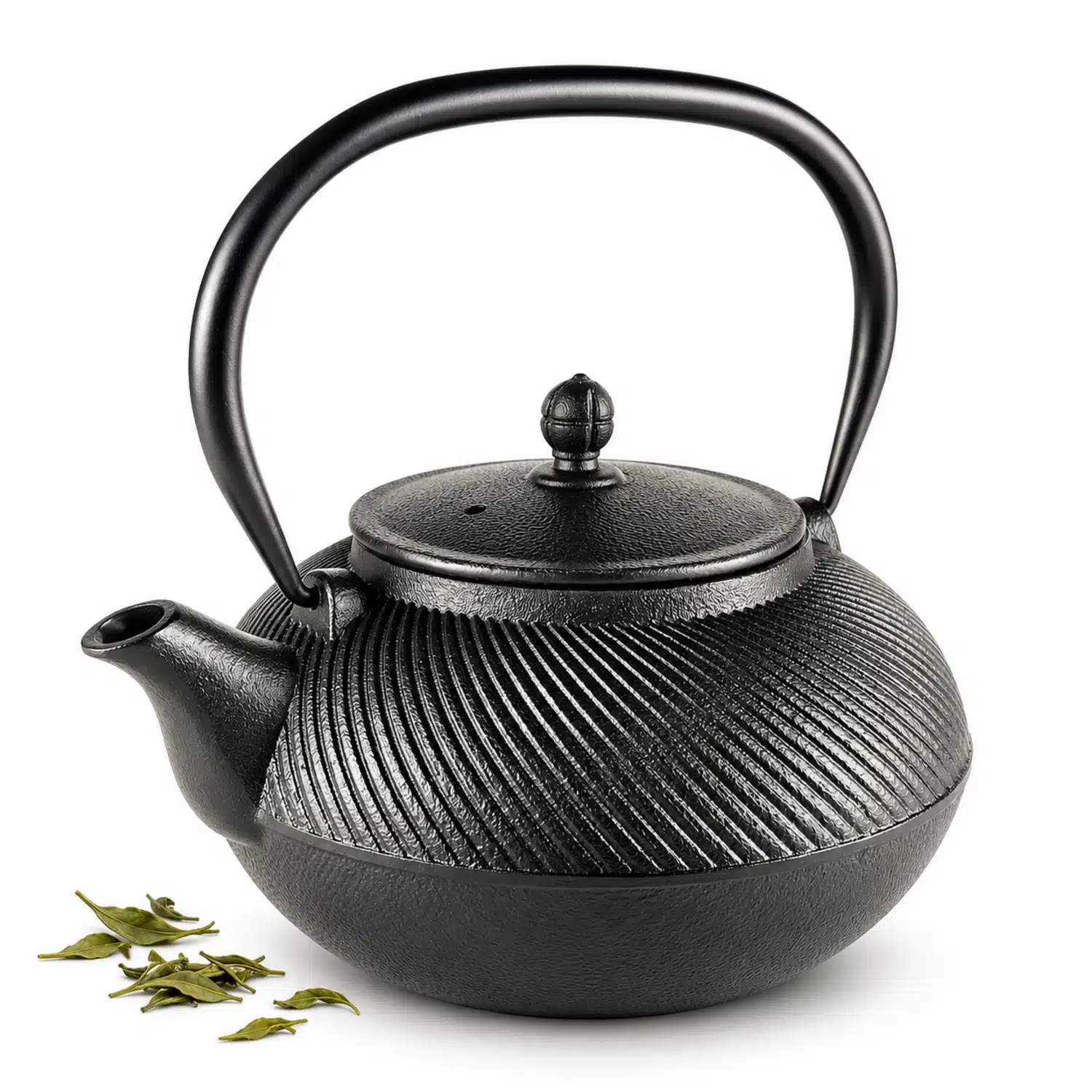
Most of our models hold 800 ml. The Kurotama, with its litre, is the largest in the selection: it comes into its own when you serve several cups in a row.
Arare, spiral or ribs
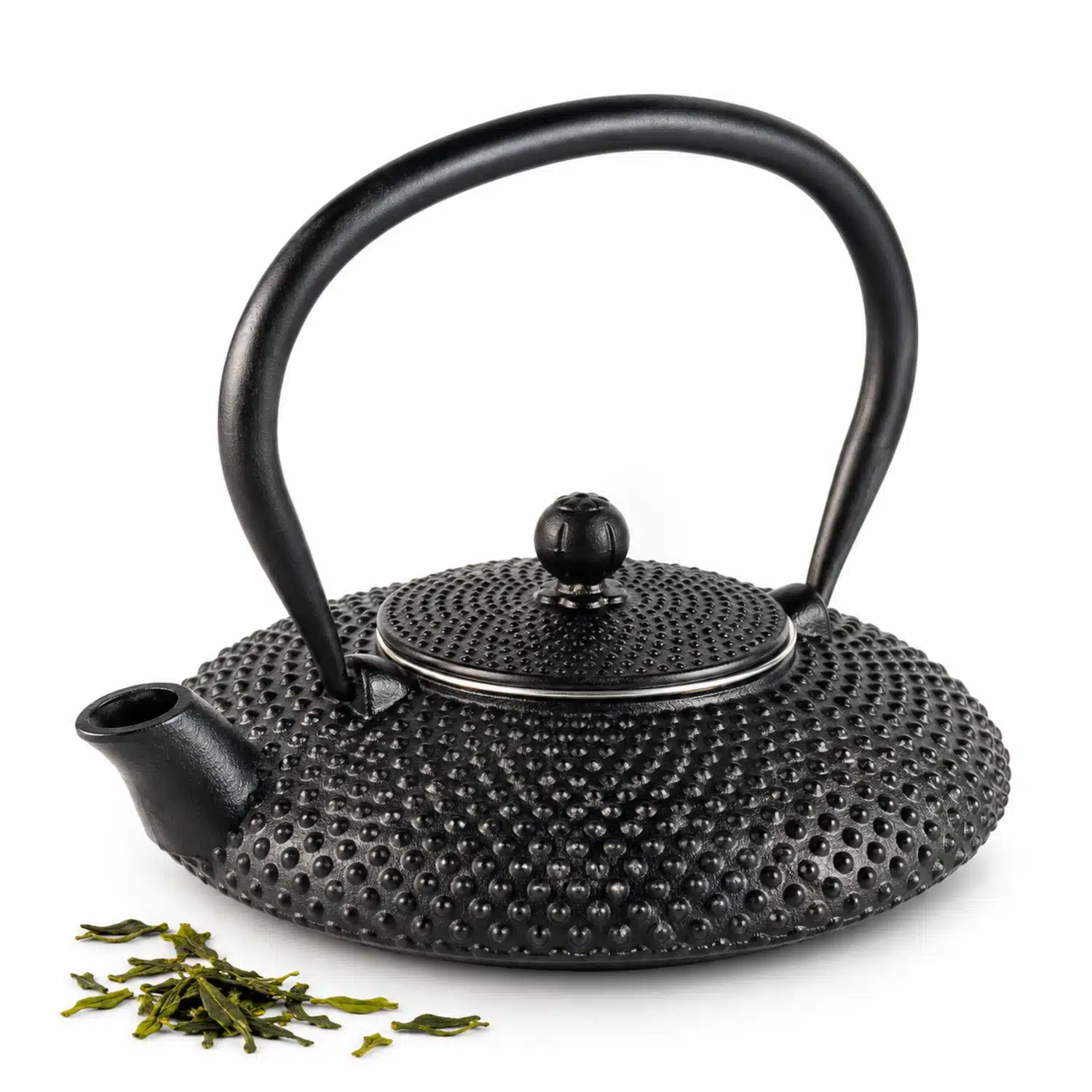
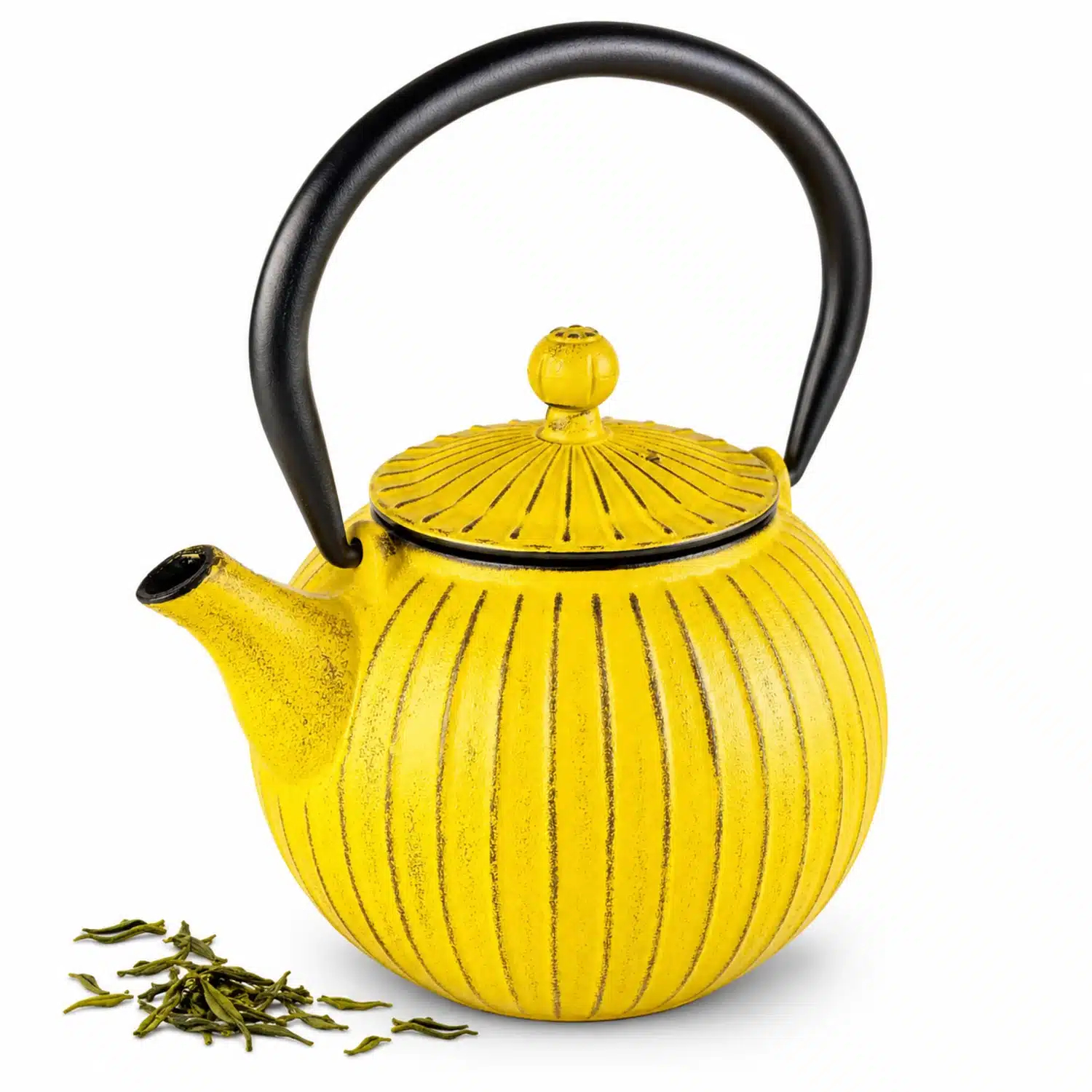
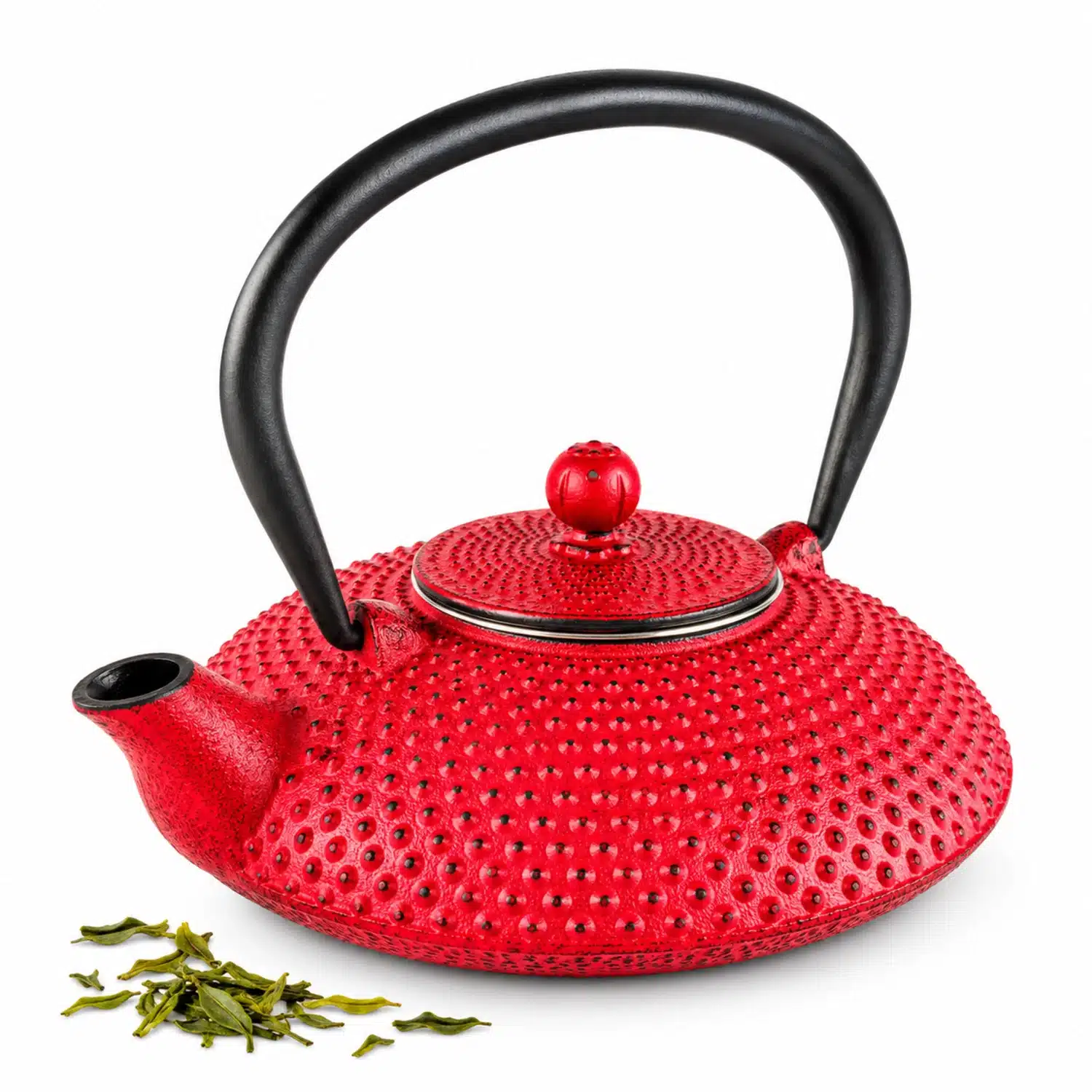
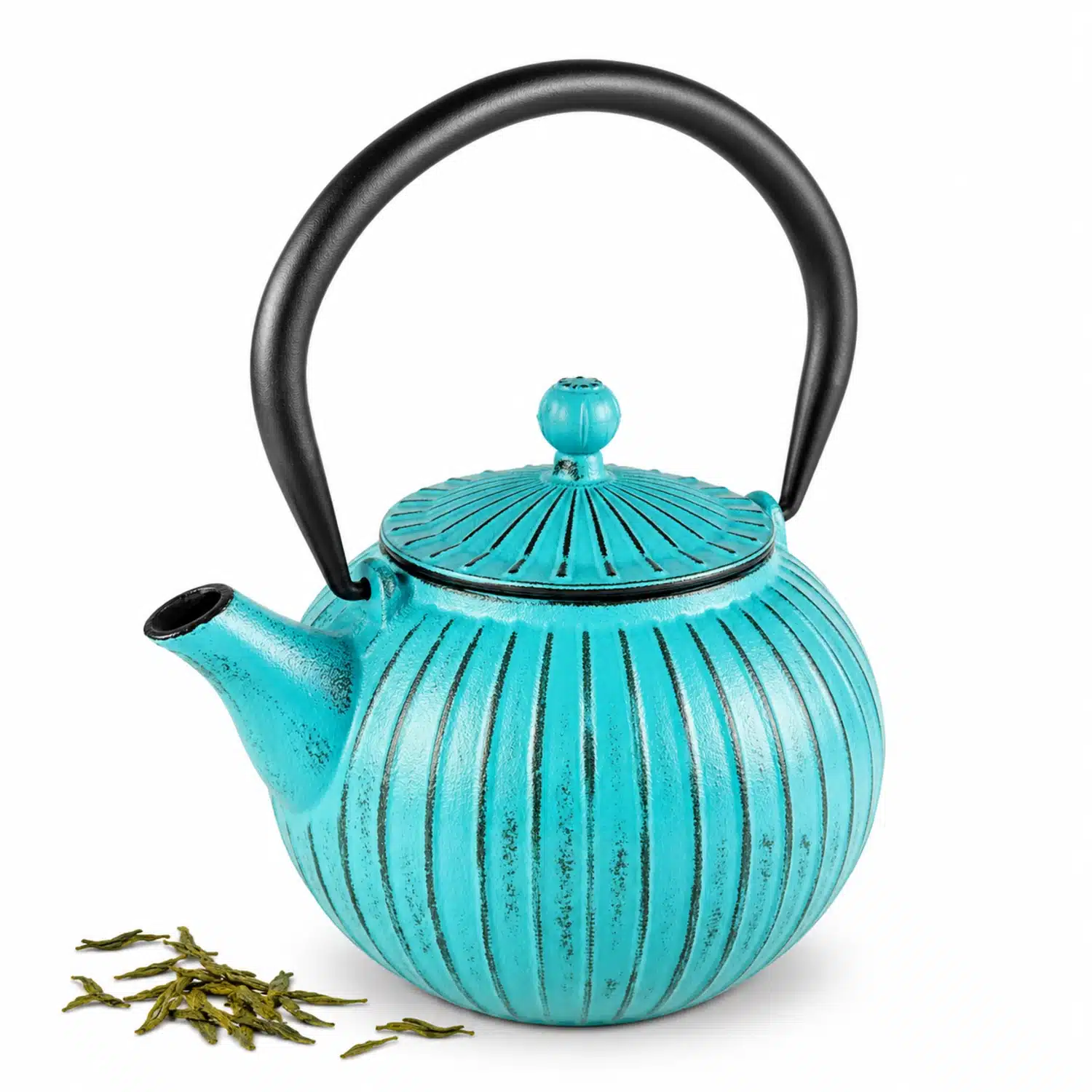
Arare dots cover the Kurogane and the Momiji, spiral grooves dress the Kurotama, and vertical ribs sculpt the two Apsara models.
Black, red, yellow, turquoise
Black brings out the relief. The red of the Momiji and the yellow and turquoise of the Apsara models offer a change from dark cast iron.
Cast-iron teapot or kettle: don't mix them up
The magazine Japan Objects, which covers Japanese craftsmanship, distinguishes two objects that are often confused. The cast-iron kettle is used to heat water and goes over the flame. The cast-iron teapot only holds the tea: it is not heated directly.
So the water is heated separately, then poured over the leaves placed in the infuser. Its quality also shows in the cup: we have written a guide on which water to choose for tea and herbal infusions.
The origins of Japanese cast-iron teapots
In Japan, cast iron crafted for tea has a name: Nanbu tekki, a craft from the former Nanbu region, now Iwate Prefecture. According to Japan Objects, Morioka ironware developed there in the 17th century, during the Edo period, and Nanbu tekki was recognised as a national traditional craft in 1975.
The arare pattern, those raised dots whose name means hailstone, became a classic on tea-room kettles from the 16th century onward, according to the Smithsonian's National Museum of Asian Art. Our Kurogane and Momiji models take up the design.
Caring for a cast-iron teapot
Which teas to brew in a cast-iron teapot?
A cast-iron teapot takes any loose-leaf tea. Our favourites to brew in it are Japanese teas, genmaicha first and foremost.
To adjust the steeping time to each plant, our guide on steeping times for herbal infusions gives guidance.
Prefer to watch the tea brew? Our teapots section also includes glass and ceramic.
Between pots, the leaves stay dry in our tea tins with a double lid.
Cast-iron teapot: your questions
Can a cast-iron teapot go on the stove?
No. Japan Objects reserves the flame for the cast-iron kettle: the teapot takes water that has already been heated.
How do I stop a cast-iron teapot from rusting?
By emptying it and drying it well after each use, without leaving any water in it.
Is a cast-iron teapot dishwasher safe?
No, neither in the dishwasher nor in the microwave: it is rinsed by hand.
What capacity should I choose for a cast-iron teapot?
800 ml for most of our models, 1 litre for the Kurotama, the largest in the selection.
Why is a cast-iron teapot so heavy?
It is the weight of the metal: our models weigh 1.4 kg empty, according to the manufacturer's specifications.
What does arare mean on a cast-iron teapot?
Hailstone, in Japanese. The word refers to the pattern of raised dots.