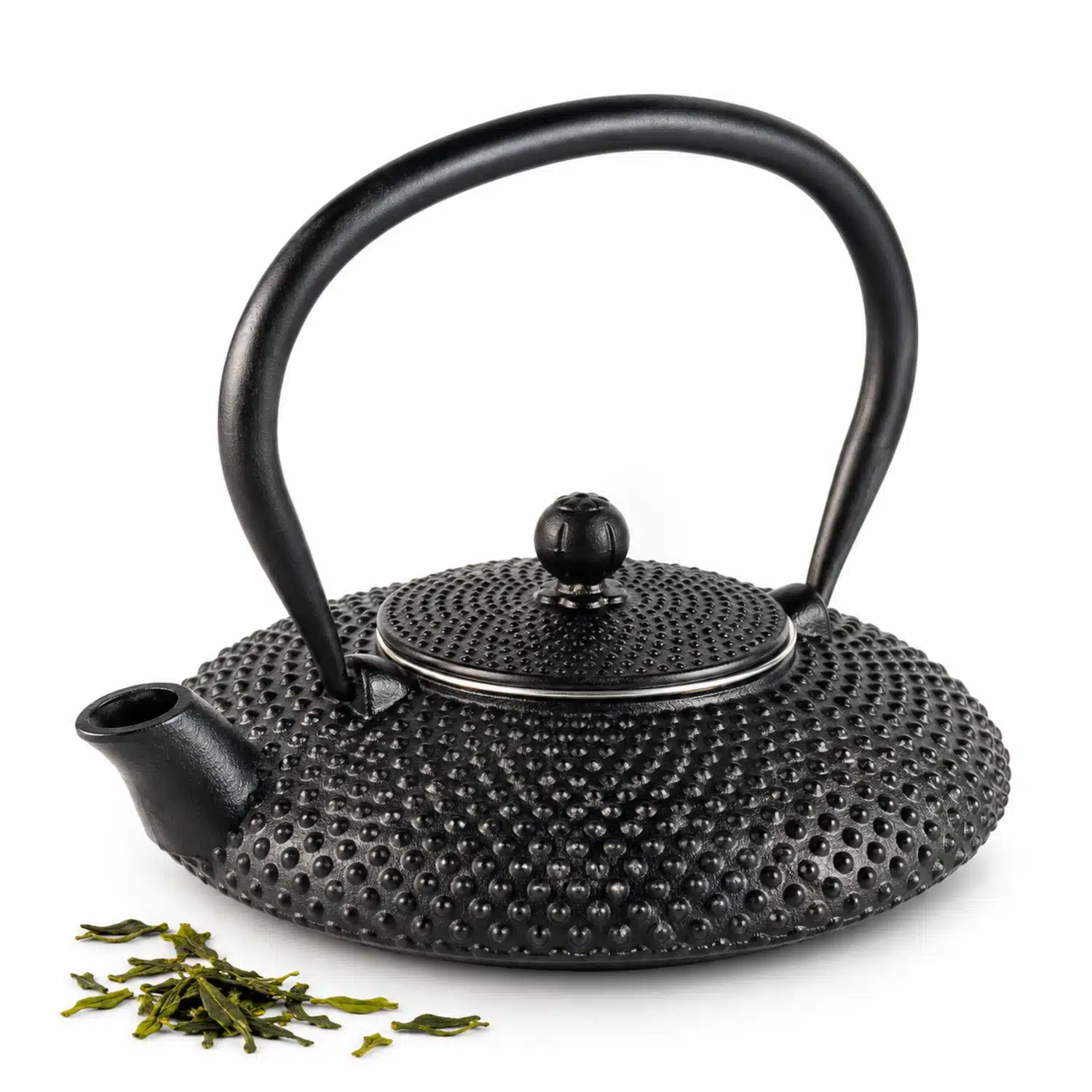
Arare, the hailstone pattern
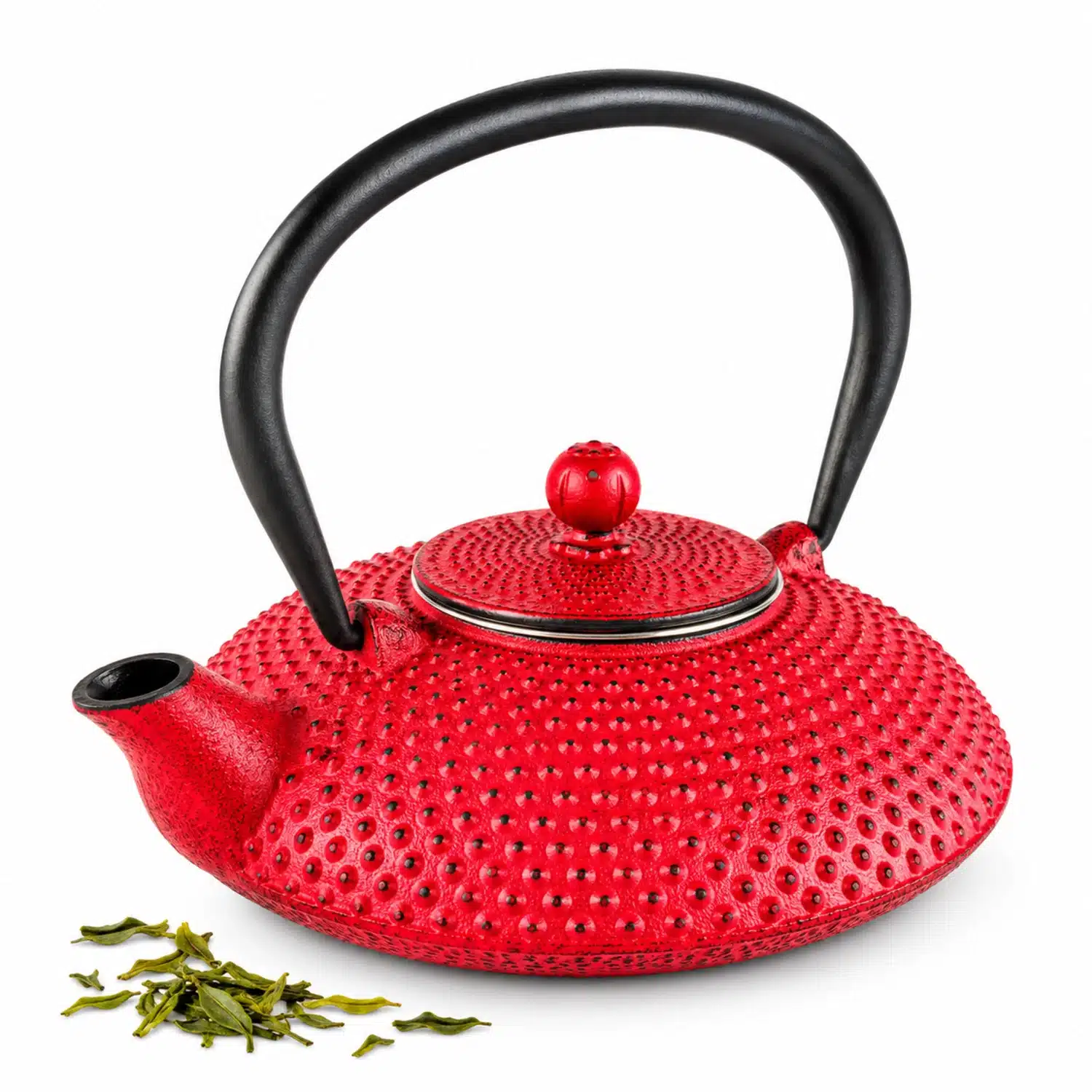
In Japanese, arare means hailstone, as the magazine Japan Objects explains: the name comes from the small, regular bumps that cover the iron. It is the texture that made Nanbu cast iron famous.
The Smithsonian's National Museum of Asian Art, which holds a 19th-century kettle with this decoration, notes that the pattern became a classic on tea-room kettles from the 16th century onward.
On the Kurogane, the dots run down to the base and are repeated on the lid, which is ringed with a thin silver band.
What sets the Kurogane apart
Low profile
16.2 x 13.5 x 14 cm for a wide, low silhouette.
Stainless infuser
The 304 stainless steel basket sits in the opening and lifts out with the leaves.
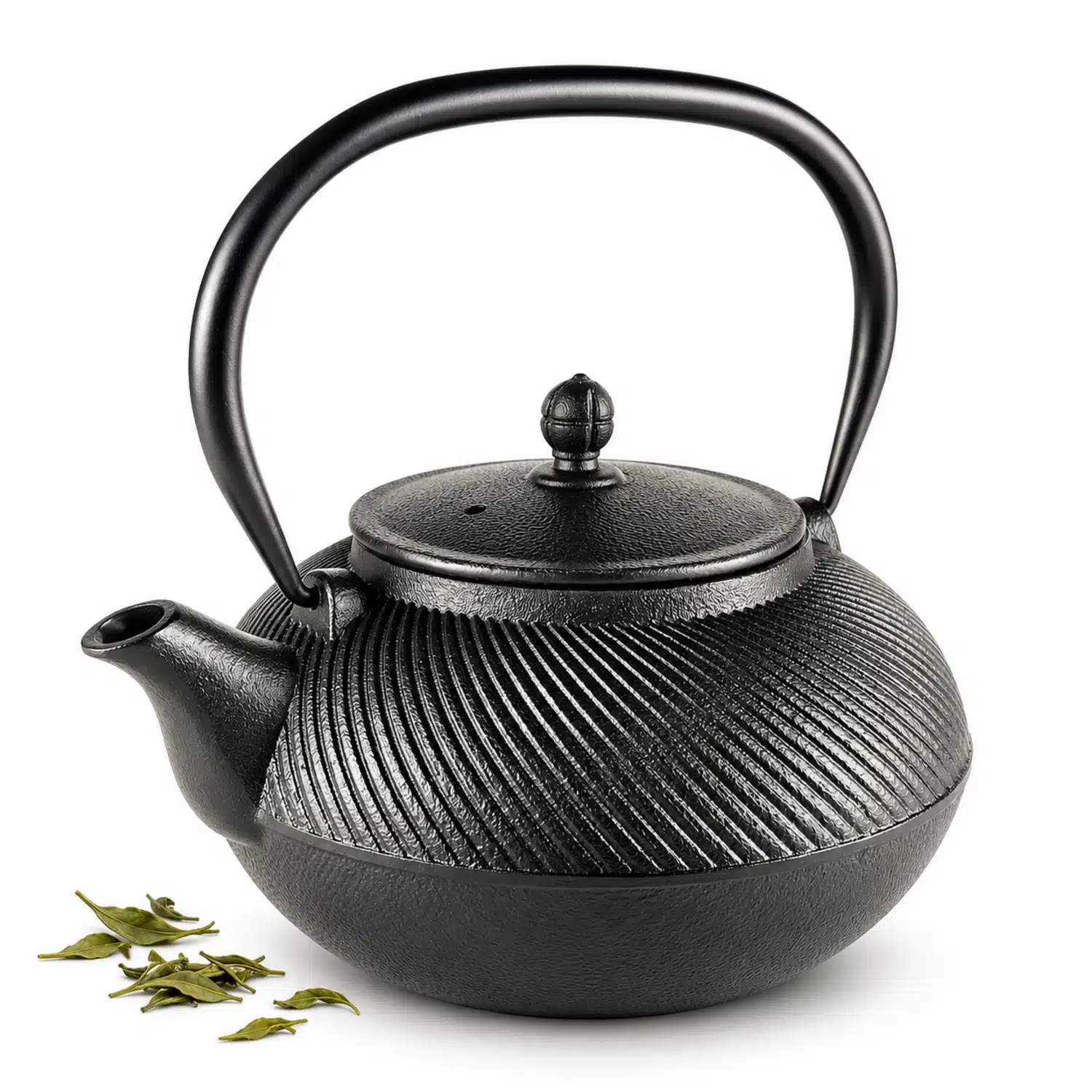
Black cast iron
A sober shade that lets the relief speak.
Red version
Same shape and same pattern in red: the Momiji teapot.
Which teas to brew in it?
We like to brew Japanese green teas in it, such as our organic genmaicha with toasted rice.
On care, Japan Objects advises against leaving cast iron damp, as it can rust: rinse it with hot water, empty it and dry it after each tea.
Kurogane arare cast-iron teapot specifications
FAQ: Kurogane arare cast-iron teapot
What does arare mean?
Hailstone, in Japanese. The term refers to the pattern of raised dots on Japanese cast iron.
What is the capacity of the Kurogane?
800 ml, for 16.2 x 13.5 x 14 cm and 1.4 kg.
Is the Kurogane teapot dishwasher safe?
No. Rinse it by hand, then dry it: Japan Objects advises against the dishwasher for cast iron.
Does it come in another colour?
The same model comes in red, under the name Momiji.